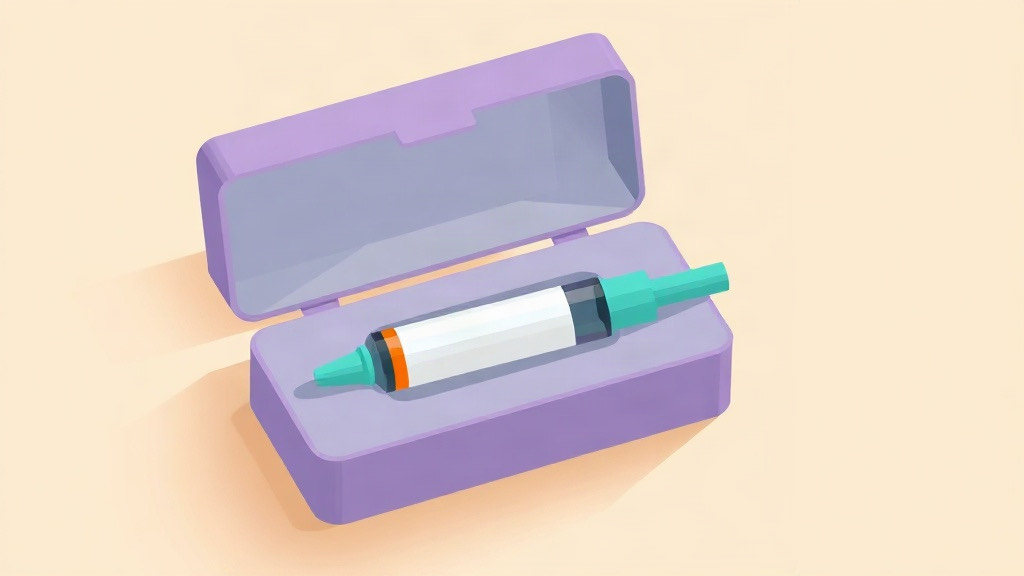
It usually starts with a search through the refrigerator. A carton is pulled out, the fine print is squinted at, and there it is: EXP, followed by a date that may already have passed, or is close enough to raise the question. The pen looks fine. The liquid looks fine. There are doses left in it, and it was not cheap.
The short answer to the headline question is no. The interesting part, and the part that actually helps, is why: every pen carries two separate clocks, most people only watch one of them, and the printed date governs less of the calendar than you might expect.
Two clocks, one pen
The first clock is the one you found on the carton. The expiration date is printed after EXP on the pen label and on the carton, and it applies to a pen stored as the label says to store it. It is a date set by the manufacturer for an unopened, properly refrigerated pen.
The second clock starts the moment the first one becomes irrelevant to daily life. The in-use window begins when a pen is first used, or first kept at room temperature. From that moment, the pen is on a countdown measured in days or weeks, not in months or years, and that countdown runs regardless of what the EXP line says.
The rule that ties them together is simple and unforgiving: whichever of the two runs out first is the one that governs. A pen can be months from its expiration date and already past its in-use window. The reverse also happens, with an old pen from the back of the fridge carrying an EXP date that passed somewhere along the way. Both clocks have to be checked, every time.
How to read each clock
Reading the expiration date has one wrinkle worth knowing. When a medicine label prints only a month and a year, the expiration date is the last day of that month. So a carton showing a month gives you that entire month, not the first of it, and the deadline arrives one day later than a quick glance suggests.
Reading the storage rules means turning to the label itself. The commonly published figures are these: unopened pens belong in the refrigerator at 2 to 8 C (36 to 46 F), and must never be frozen. Once in use, the room-temperature allowances differ by product. Ozempic may be kept for up to 56 days at or below 30 C (86 F); Mounjaro and Zepbound for up to 21 days; Wegovy single-dose pens for up to 28 days.
Those numbers differ between products, and they differ between countries, which is why the only honest instruction is to treat the leaflet in your own carton as the authority. The figures above are context, not a substitute. Two neighboring articles carry the rest of the storage picture: where pens belong in the refrigerator is covered in Storing GLP-1 Pens: Fridge Habits That Prevent Waste, and what to do when a pen spends accidental time at room temperature is the subject of Left Your Pen Out Overnight? How to Think It Through.
What the expiration date promises, and what it does not
An expiration date is a promise with conditions attached. It assumes the storage the label describes: refrigerated, unfrozen, undamaged. It is a promise about a pen that was kept properly, not about any pen.
That cuts in both directions, and both directions matter. A pen that sat in a hot car or spent a summer on a warm counter is not protected by a distant EXP date; the date never covered that pen. And a pen that was stored carefully is covered by its date all the way to the last day of the printed month, with no need to retire it early out of vague caution. The date and the storage history have to be read together, which is why the two clocks in the previous section cannot be checked independently.
What the date does not do is weaken gradually as it approaches. There is no gentle slope where a pen becomes a little less potent over the final month. The honest position is that nobody outside a laboratory can see potency at all, on either side of the date, and the date exists precisely because the eye cannot.
The visual check, and where it ends
The labels do ask you to look at the pen before using it, and the check is worth doing. The liquid should be clear and colorless. The labels say not to use a pen if the liquid is cloudy, colored, thickened, or has particles in it, or if the expiration date has passed. Notice that last clause: the visual check and the date check appear in the same sentence, as two halves of one instruction.
Here is the limitation that trips people up. The visual check only runs one direction. A cloudy or colored liquid disqualifies a pen immediately, but a clear, normal-looking liquid qualifies nothing. A pen that looks completely fine can still be past its date, because nobody can see potency. It looked fine is not a reason to use an expired pen; it is an observation about the wrong property.
This is why the temptation that follows finding an expired pen, the one that starts with it still looks clear, is worth naming and declining. The look of the liquid tells you the pen has not visibly spoiled. It tells you nothing about whether the medicine still does what it is meant to do.
 GLP 1 Tracker AppWrite the date a pen was first used into the note on that dose entry, and the in-use clock stops being a guess.
Get the app
GLP 1 Tracker AppWrite the date a pen was first used into the note on that dose entry, and the in-use clock stops being a guess.
Get the app
What to do with an expired pen
The sequence is short. Do not use it. Call the pharmacy, which can say whether a replacement can be filled and how soon; pharmacists answer exactly this question all the time, and they can see the product, the strength and the prescription in front of them. Tell your prescriber if a dose will be missed because of the expiration, because each product has its own published guidance for late doses, which our missed dose guide sets out label by label.
Then dispose of the pen the way the sharps article describes: into a proper sharps container, never household trash. Our guide to Sharps Disposal at Home: Simple and Legal covers the options, which are simpler than most people expect.
Two pressures deserve a direct word, because they are real and they push in the wrong direction. A shortage does not make an expired pen usable. Neither does cost. Medicine that has passed its governing date is not a stretched resource; it is an unknown, and the unknown is the reason the date exists. What actually helps with cost and access is the phone call to the pharmacy, early, while there is still time to arrange a replacement.
A habit that makes the in-use clock visible
The expiration date is printed on the pen, which is why it gets watched. The in-use clock is printed nowhere, which is why it gets missed, and it is usually the one that governs.
The fix is one line of writing. The note field on a dose entry is a good place to record the date a pen was first used: the day you break the seal, log the shot as usual and add a short note with the date. From then on, the in-use clock is visible. Any day you want to know where the pen stands, you find the first-use note, count forward through the logged doses, and compare the result against the label's allowance and the EXP date.
It is a two-second habit that runs alongside the logging you are already doing, and it converts the most common expiration question from archaeology into arithmetic. The pens are already keeping one clock. This way you keep the other one.
Frequently asked questions
Can I use my GLP-1 pen if it is only a few days past its expiration date?
No. The labels are unambiguous on this point: do not use a pen if the expiration date has passed, and no amount of closeness changes it. The date is a promise about a pen stored as the label describes, and once it has passed there is no way to verify the medicine still works. Do not inject it. Call your pharmacy, which can say whether a replacement can be filled and how soon, and tell your prescriber if a dose will be missed because of it.
If the label shows only a month and a year, when does my pen actually expire?
When a medicine label prints only a month and a year, the expiration date is the last day of that month. A carton reading a given month gives you the whole of that month, not the first of it. That convention is worth knowing because it buys genuine time in some cases and hides a deadline in others, so check the printed date carefully rather than guessing in either direction.
Does the in-use window or the printed expiration date matter more?
Whichever runs out first is the one that governs. The expiration date applies to a pen stored as the label says, while the in-use window starts the moment a pen is first used or first kept at room temperature. A pen can carry a distant expiration date and still be governed by an in-use window that closed weeks ago. Write down the date a pen is first used, and compare both clocks every time.
My pen is past its date but the liquid looks completely normal. Is it safe to use?
No. The visual check only runs one direction: the labels say the liquid should be clear and colorless, and not to use a pen that is cloudy, colored, thickened or has particles in it. A normal appearance disqualifies nothing, because nobody can see potency. A pen that looks completely fine can still be past its date, which is exactly why the printed date, not the look of the liquid, is the deciding fact.
What should I do with a pen that has expired?
Do not use it, and do not try to stretch it. Call your pharmacy first: they can say whether a replacement can be filled and how soon, and they field this question constantly. Tell your prescriber if a dose will be missed because of the expiration, since each product has its own guidance for late doses. Then dispose of the pen the way you dispose of any used pen, through a proper sharps container, never household trash.