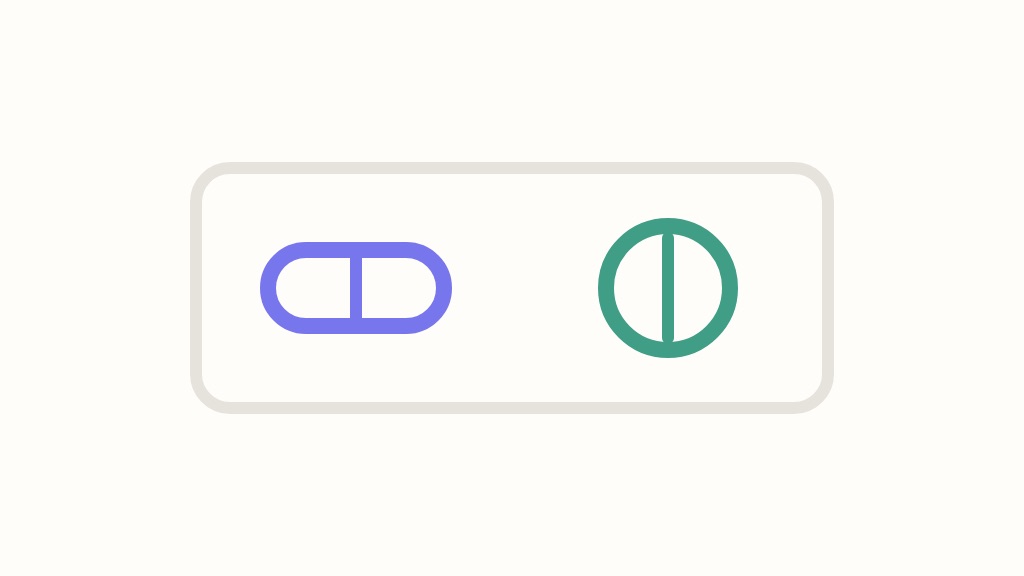
A pharmacy hands over a box with an unexpected name on it. Someone prescribed Rybelsus receives Ozempic tablets, or the reverse, and the number on the blister looks wrong. The useful facts arrive together. Oral semaglutide is one medicine shipped under two brand names, both names are covered by a single prescribing information, and the number on the tablet is not comparable across the two. Nothing about the medicine changed; only the scale it is measured on did.
That single shared document is unusual and worth pausing on. Most brand pairings in the GLP-1 world, like the tirzepatide pair or the injectable semaglutide pair, carry separate labels for separate approved uses. Here the same manufacturer publishes one prescribing information titled for both Ozempic tablets and Rybelsus, and one document covers both. The two-name pattern in general is the subject of Mounjaro vs Zepbound: Same Molecule, Different Labels; oral semaglutide is the one place in the class where the pattern collapses into a single label.
One document, two names
Because it is one label, the approved uses are identical for both names. Each is indicated as an adjunct to diet and exercise to improve glycemic control in adults with type 2 diabetes, and each is indicated to reduce the risk of major adverse cardiovascular events, defined in the label as cardiovascular death, non-fatal myocardial infarction or non-fatal stroke, in adults with type 2 diabetes who are at high risk for those events. There is no indication that belongs to one name and not the other. Whatever differs between the two is logistics, not purpose.
The tablets themselves are easy to tell apart, which turns out to matter. Rybelsus tablets are oval, debossed with 3, 7 or 14 on one side and novo on the other. Ozempic tablets are round, debossed with 1.5, 4 or 9 on one side and novo on the other. Both are white to light yellow, and both come in bottles of 30. The shape tells you which scale you are reading before you get anywhere near the fine print, and the debossed number on an oral semaglutide tablet always belongs to exactly one of the two ladders.
Two dose ladders, not two strengths
The ladders run in parallel, one month at a time. The label says the starting dose of each is not effective for glycemic control; the first 30 days are initiation, not treatment at a working dose. How titration schedules work across the whole class, weekly steps and monthly steps and why the climbs are slow, is covered in GLP-1 Titration Schedules Explained, Medication by Medication.
| Days | Rybelsus | Ozempic tablets |
|---|---|---|
| 1 to 30 | 3 mg | 1.5 mg |
| 31 to 60 | 7 mg | 4 mg |
| 61 onward | 7 mg, or 14 mg if additional glycemic control is needed | 4 mg, or 9 mg if additional glycemic control is needed |
The most important sentence in the whole document, for the box-with-the-other-name moment, is short: the label states plainly that Rybelsus and Ozempic tablets are not substitutable on a mg-to-mg basis. A 7 is not a 7. The two scales measure the same medicine, and the conversion between them is printed elsewhere on the label, in the switching rules, not on the tablet.
Why the milligrams differ
The answer sits in the clinical pharmacology section, and it is a story about absorption rather than about strength. The label reports that absolute bioavailability was approximately 0.4% to 1% after oral administration of the 3 mg, 7 mg and 14 mg Rybelsus doses, and approximately 1% to 2% after the 1.5 mg, 4 mg and 9 mg Ozempic tablet doses. A larger fraction of each Ozempic tablet dose reaches circulation, so the same exposure comes from a smaller number of milligrams.
Crucially, the label also reports no clinically significant differences in mean steady-state exposure between the paired doses of the two formulations. That is what makes the pairs pairs: 7 mg of one and 4 mg of the other are the same destination arrived at through different absorption, and the same holds for 14 and 9. Maximum concentration is reached about 1 hour after an oral semaglutide tablet, under either name. None of this is a reason to match doses yourself; it is the reason the numbers look unrelated until the label explains them.
 GLP 1 Tracker AppLog a daily tablet dose and note which product it was, so a dose history stays readable even if the name on the bottle changes.
Get the app
The switching rules, printed
Switching between the two names has rules in the prescribing information, which is itself notable: most brand pairs have no printed conversion at all. The first rule is a boundary. Do not switch during the initiation phase, days 1 to 30. After that, the pairings from the pharmacology section become the official conversions: 7 mg of Rybelsus pairs with 4 mg of Ozempic tablets, and 14 mg pairs with 9 mg. When a switch happens, the other product starts the day after the first one is stopped, with no overlap.
Switching in from the injection has its own printed route. Patients on the 0.5 mg dose of Ozempic injection may switch, and one week after the last injection they start 7 mg or 14 mg of Rybelsus, or 4 mg or 9 mg of Ozempic tablets. Every one of these numbers is a rule for a clinician to apply, not a menu to choose from; what a reader gets from knowing them is the ability to recognize that a pharmacy substitution or a prescriber switch follows a written logic rather than an arbitrary one. The wider subject of moving between GLP-1 medicines, including what happens to your records, is covered in Switching GLP-1 Medications: Tracking Through the Transition.
What a daily log should record
Everything else about the day is shared, because it is one label. One tablet orally once daily, on an empty stomach in the morning, with water, up to 4 ounces, and no other liquid. Swallow whole, never split, crush, chew or dissolve. No more than one tablet a day. Wait at least 30 minutes before eating, drinking anything else or taking other oral medicines. If a dose is missed, skip it and take the next dose the following day. Storage is room temperature, in the original bottle, to protect the tablets from moisture. The daily discipline of oral semaglutide has its own full treatment in Tracking Rybelsus: Daily Oral Semaglutide and Its Rules.
For tracking, the one instruction this pairing adds to a routine is bookkeeping: a dose log entry should record which product the number belongs to. Seven milligrams under one name and four under the other are the matching rungs of two parallel ladders, and a log that names the product keeps that straight months later, when the box in the cabinet has changed names once or twice. In the app, a note on a dose entry is the place for the brand name on the bottle that day. The injectable side of the same molecule has its own guide in Ozempic Tracker: Doses, Levels and Side Effects in One Place.
Frequently asked questions
Are Rybelsus and Ozempic tablets the same medicine?
They share one active ingredient, oral semaglutide, and one prescribing information titled for both names. The approved uses are identical: improving glycemic control in adults with type 2 diabetes and reducing the risk of major adverse cardiovascular events in adults with type 2 diabetes at high risk. The strengths differ, and the label states plainly that the two are not substitutable on a mg-to-mg basis.
Which Rybelsus dose matches which Ozempic tablet dose?
Per the label's switching instructions, 7 mg of Rybelsus pairs with 4 mg of Ozempic tablets, and 14 mg pairs with 9 mg. The label also says not to switch during the initiation phase, days 1 to 30, and that when a switch happens, the other product starts the day after the first one is stopped. Any actual switch is a prescriber decision.
Why do Ozempic tablets use smaller milligram numbers?
Because more of the drug gets into the body from each tablet. The label's clinical pharmacology section reports absolute bioavailability of approximately 0.4% to 1% after the 3 mg, 7 mg and 14 mg Rybelsus doses, and approximately 1% to 2% after the 1.5 mg, 4 mg and 9 mg Ozempic tablet doses. It also reports no clinically significant differences in mean steady-state exposure between the paired doses.
What are the daily rules for an oral semaglutide tablet?
The rules are shared because the label is shared. Take one tablet once daily on an empty stomach in the morning with water, up to 4 ounces, and no other liquid. Swallow it whole, never split, crushed, chewed or dissolved, and take no more than one tablet a day. Wait at least 30 minutes before eating, drinking anything else or taking other oral medicines. If a dose is missed, skip it and take the next dose the following day.
Can I switch from Ozempic injection to a tablet?
The label prints a route for patients on the 0.5 mg dose of Ozempic injection: one week after the last injection, they may start 7 mg or 14 mg of Rybelsus, or 4 mg or 9 mg of Ozempic tablets. Which strength, and whether switching at all makes sense, is a prescriber decision based on response and tolerability.