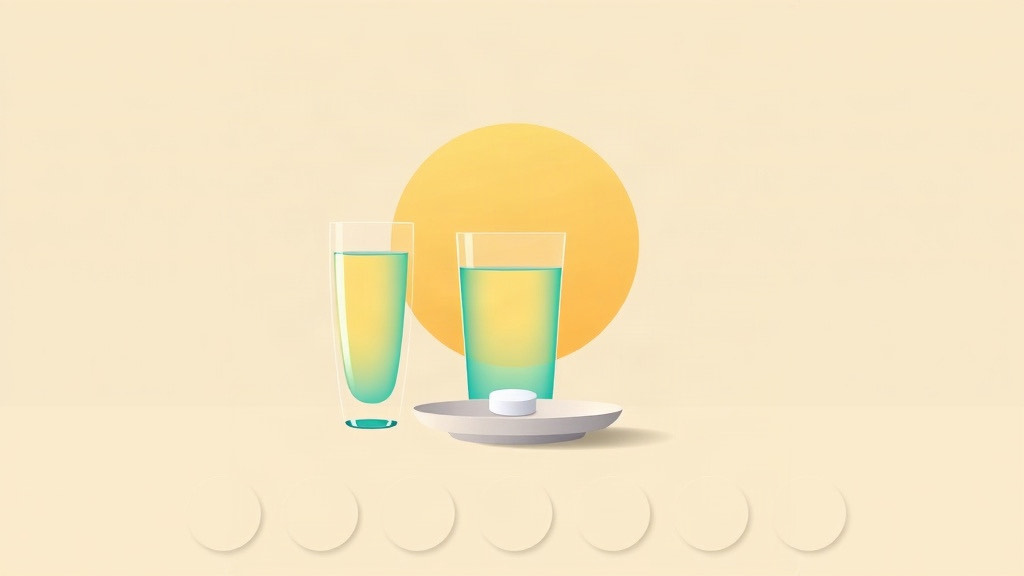
In a medication class defined by injection pens, Rybelsus is the odd one out: semaglutide as a once-daily tablet. No needles, no refrigerated pens, no shot day. In exchange, it asks for something the pens never do: a precise little morning ritual, performed exactly, every single day.
That trade changes what tracking means. Weekly injectors track an event; Rybelsus users track a habit. Here are the rules that make the tablet work, the dose ladder behind it, and the tracking rhythm that suits a daily medication.
The morning rules that make Rybelsus work
Rybelsus comes with unusually specific instructions, and per the prescribing information they exist to protect the tablet's absorption, which is easily disrupted. There are three of them:
| The rule | What it means in practice |
|---|---|
| Empty stomach | Take the tablet first thing after waking, before any food or drink. |
| Plain water only, up to about 4 oz (120 ml) | A small glass of plain water. Not coffee, not tea, not juice, and not a full tumbler. |
| Wait at least 30 minutes | No eating, no drinking anything else, and no other oral medications until the wait is over. |
The routine sounds fussy on paper and becomes automatic within weeks for most people: wake, tablet, small water, and breakfast half an hour later. The wait is usually the part that needs engineering. Anchoring it to something that already takes thirty minutes (a shower, a walk, a commute) works better than watching a clock. Those absorption rules are also why GLP-1 users often wonder about the timing of their other pills, a question our guide to GLP-1s and your other pills takes up directly.
Travel tests the ritual more than anything else. New time zones move your morning, hotel breakfasts tempt the wait, and the tablet still expects an empty stomach. Keeping medication in your carry-on and a reminder pinned to local wake-up time preserves the routine; our guide to traveling with GLP-1 medication covers schedules on the road in detail. The one-hour version of the same question, daylight saving time, gets its own short answer in time changes and daily GLP-1s.
The ladder in tablets: 3, 7, 14
Rybelsus has a titration ladder just like its injectable siblings, only measured in tablets. Per the prescribing information, treatment starts at 3 mg once daily for 30 days; that starting dose is there for acclimation rather than as a long-term treatment dose. After those 30 days, the dose may move to 7 mg, and later to 14 mg if your prescriber decides more is warranted.
Where weekly injectors count weeks at a step, Rybelsus users count days, and 30 of them is a long time to keep in your head. A tracker that ships the real Rybelsus ladder counts for you: each logged tablet advances the tally, and "day 22 of 30 at 3 mg" is always on screen rather than somewhere in a calendar app. The logic of these slow climbs, on tablets and pens alike, is covered in our guide to GLP-1 titration schedules.
Daily dosing changes the tracking game
A weekly shot is an event with a ritual around it. A daily tablet is a habit, and habits live or die on friction and cues. That has two practical consequences for tracking.
First, the reminder matters more. Miss a weekly reminder and you usually still remember the shot that day; miss a daily one during a chaotic morning and the tablet simply does not happen. A fixed-time reminder with an overdue alert behind it, placed at your actual wake-up time rather than an aspirational one, is the single highest-value piece of the setup.
Second, the log needs to be nearly effortless, because you will use it every day. One tap to record the tablet, timestamped, and you are done. The timestamp earns its keep quietly: it also marks when your 30-minute wait began, and over months it shows your consistency honestly, including the weekend drift you might not notice otherwise. Consistency compounds here in a way weekly schedules never test: a 30-day step offers thirty chances to drift, and a visible run of logged mornings becomes its own quiet motivation.
 GLP 1 Tracker AppFree on the App Store. Daily dose logging with the real Rybelsus ladder, reminders and overdue alerts, all on your phone only.
Get the app
GLP 1 Tracker AppFree on the App Store. Daily dose logging with the real Rybelsus ladder, reminders and overdue alerts, all on your phone only.
Get the app
Still semaglutide: the level tells a calm story
Under the daily rhythm, Rybelsus is the same molecule as Ozempic and Wegovy, with the same half-life of about one week. Each small daily dose stacks on what remains of the previous ones, so your medication level builds smoothly and settles into a steady state after roughly four to five weeks, just as it does for the weekly pens.
That long half-life is also why one imperfect morning is not a crisis: a single missed tablet shows up as a shallow dip in a level built from weeks of doses, not a collapse. An educational level curve, like the one in GLP 1 Tracker App, makes that visible, with the standing caveat that it is an estimate for understanding, never a measurement or a dosing tool. The full story is in our semaglutide half-life guide.
Missed a tablet? Skip it, never double
The Rybelsus missed-dose rule is the simplest in the class. Per the prescribing information: skip the missed day entirely and take your next tablet the following morning as usual. Never take two tablets in one day to catch up, and do not take the tablet later in the day after food has entered the picture; the day is simply skipped.
For mornings that go sideways in ways the label does not spell out, your pharmacist is the right call, and they field these questions constantly. The missed-dose rules for the entire GLP-1 class, weekly pens included, are summarized in our missed dose guide.
A two-minute daily log that earns its keep
Because Rybelsus already has you in the app once a day, the marginal cost of a fuller log is nearly zero, and a small routine pays for itself at every follow-up:
- The tablet, one tap, at the moment you take it.
- Weight, if you are a daily weigher, read as a trend rather than a verdict. Apple Health import picks it up from a smart scale automatically.
- Protein and water, because a suppressed appetite quietly under-serves both.
- A side effect note with severity when there is anything to note; per the label, nausea is the most common effect and tends to be worst after dose increases before fading.
- One sentence about appetite or energy, which becomes surprisingly valuable in aggregate.
That is the whole routine. Our guide to what to log every day on a GLP-1 makes the case for keeping it exactly this small, and no smaller.
The takeaway
Rybelsus swaps the needle for a ritual: empty stomach, a small glass of plain water, thirty patient minutes, every morning, with a 30-day count running underneath during titration. It is a medication built for people who can keep a rhythm, and a tracker is the rhythm section. GLP 1 Tracker App handles the daily cadence free, keeps the count and the reminders, draws the level curve, and leaves every byte of it on your phone: no account, no server, nothing collected. Kept for a few months, that record also answers the two questions every follow-up begins with: how consistently the tablet happened, and how well it was tolerated.
Frequently asked questions
Why does Rybelsus have to be taken on an empty stomach?
Per the prescribing information, the empty-stomach rule protects the tablet's absorption, which is easily disrupted. Rybelsus is taken first thing after waking with plain water only, up to about 4 oz (120 ml), followed by a wait of at least 30 minutes before any food, other drinks or other oral medications. Food or a bigger drink too soon can interfere with how much semaglutide is absorbed, which is why the label is so specific.
What happens if I forget to take my Rybelsus in the morning?
Per the prescribing information, skip the missed day entirely and take your next tablet the following morning as usual. Do not take the tablet later in the day once food or drink is in the picture, and never take two tablets in one day to catch up. Because semaglutide's half-life is about a week, one missed tablet is a shallow dip in your level, not a reset. For odd situations, ask your pharmacist.
Can I drink coffee before taking Rybelsus?
No. The label calls for an empty stomach and plain water only, up to about 4 oz (120 ml), so coffee waits until afterward. Take the tablet first thing after waking, wait at least 30 minutes, and then have coffee, breakfast and any other oral medications. Anchoring the wait to something that already takes half an hour, like a shower or a walk, makes the routine much easier to keep.
What are the doses of Rybelsus?
Rybelsus comes in three once-daily doses: 3, 7 and 14 mg. Per the prescribing information, treatment starts with 30 days at 3 mg, a starting dose meant for acclimation rather than long-term treatment. After those 30 days the dose may move to 7 mg, and later to 14 mg if your prescriber decides more is warranted. When and whether you step up is always your prescriber's call.
Can an app remind me to take Rybelsus every day?
Yes. GLP 1 Tracker App, free on the App Store, supports daily medications like Rybelsus with the real 3, 7 and 14 mg ladder as a preset, a fixed-time morning reminder, and an overdue alert if the morning slips past. Each tablet is logged with one tap, the 30-day count at a step keeps itself, and everything stays on your phone with no account and no data collection.