Before a GLP-1, snacking is mostly a defensive problem. The advice everywhere is about how to resist the vending machine, not whether the snack deserves to be eaten. Then the medication starts, appetite goes quiet, and the question inverts itself. The issue is no longer holding yourself back from snacks. It is deciding whether a snack deserves a place in your day at all.
Our answer is that snacks are welcome on a GLP-1, but they have to earn it. That is a different standard from the one most of us grew up with, and it is a better one. This article is about the standard, and about the small system that makes it easy to live by.
Snacks are optional now
The most useful snack fact on a GLP-1 is also the most freeing one: if you are not hungry, you do not need to snack. Meals that cover your protein and leave you satisfied make between-meal eating optional rather than necessary. Plenty of people on these medications settle into two or three modest meals a day and never think about a snack in between. That is not undereating by default; it is a legitimate structure, and for many people it is simply the natural shape of a GLP-1 day.
This is worth saying plainly because snacking carries a lot of inherited should. We were all trained to fear arriving at a meal too hungry, to keep the metabolism stoked, to never let the kitchen close. Some of that habit was a response to real hunger that no longer exists in the same way. When appetite is muted, eating between meals stops being damage control and becomes a choice, and a choice can be declined.
What replaces the default is a test, and it is a short one. A snack earns its place when it is planned, small, and protein-forward. Anything else is probably grazing wearing a disguise.
Grazing is not snacking
A planned snack and a graze can involve the same food and be entirely different events. A snack is an event: you decided on it, it had a beginning and an end, and it is in your log. A graze is a mist: a handful here while making dinner, a few bites there from the bowl in the break room, a corner of this and a sliver of that, none of it decided and little of it remembered.
Grazing deserves special suspicion on a GLP-1 for two reasons. First, the fullness cues that used to halt it mid-handful are blunted along with appetite, so the natural brake is weaker than it was. Second, grazing is invisible by design. It leaves no entry in a food log, because nothing about it felt like eating. A planned snack is accountable; a graze is not, and unaccountable eating is exactly what confuses a stalled month when you go looking for explanations later.
The fix is not willpower. It is structure. If you want something between meals, make it a real snack: chosen in advance, one modest portion, logged. If it is not worth logging, that is useful information about whether it was worth eating.
What a snack that earns its place looks like
Planned means it exists in your head before it exists on the counter. It might be planned that morning, or planned when you bought the groceries, but somewhere along the line somebody decided. Deciding in advance is what separates a snack from an impulse, and it also gives you a chance to notice you are not actually hungry and skip it without a negotiation.
Small follows from the medication itself. Appetite is suppressed and the stomach empties more slowly, so a snack sized for your pre-GLP-1 appetite can land heavily and sit uncomfortably. A GLP-1 snack is a modest amount that takes the edge off and then gets out of the way. What modest looks like on the plate is its own subject, and we treat it properly in What a Portion Looks Like on a GLP-1.
Protein-forward is the part that does the earning. On a suppressed appetite, every eating occasion is precious real estate, and spending one on food with no protein in it is a missed opportunity. The daily figure that matters is roughly 1.0 to 1.5 g of protein per kg of body weight, with some clinicians going as high as 1.6, and how to aim at that number across a whole day is the subject of Protein Goals on GLP-1s: Protecting Muscle While Losing Weight. A snack does not need to carry the whole day's target. It just should not arrive empty-handed.
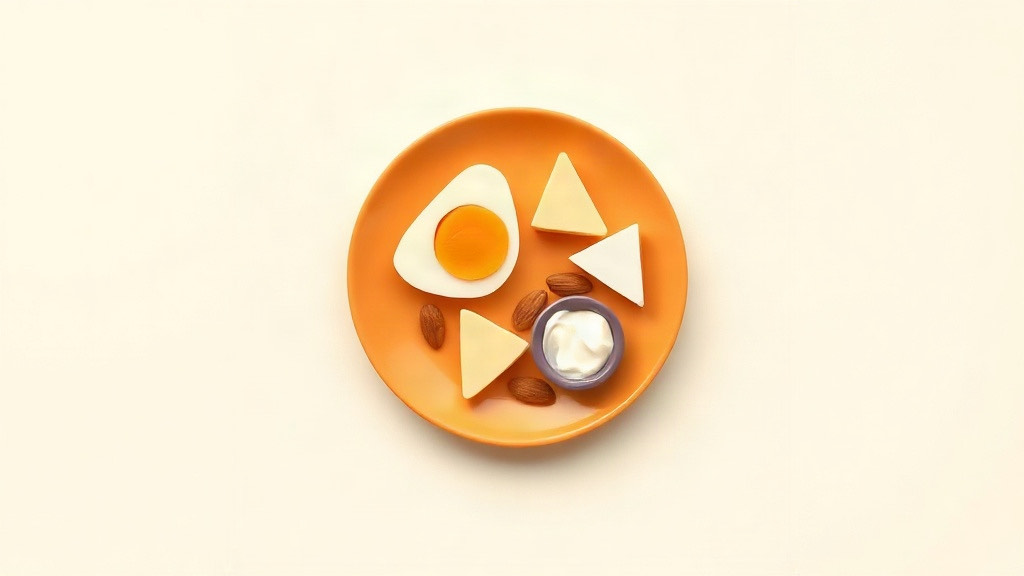
Planning is what holds the three parts together, and it happens mostly at the grocery store, not in the moment. A snack that is planned is a snack whose ingredients exist in the house, in a form that needs no assembly at the moment you are tired. A few boiled eggs in the refrigerator, a container of nuts portioned into modest amounts at the start of the week, yogurt bought in the size you actually eat: this is the entire infrastructure a GLP-1 snack habit needs. Willpower shows up nowhere in it, which is the point.
Kinds of snacks that work
The useful way to think about GLP-1 snacks is by kind of food, not by gram counts. These families travel well across appetites and weeks:
- Eggs in their many forms: a halved boiled egg, a small scramble, a wedge of frittata cut from something made over the weekend.
- Dairy and its cousins: Greek yogurt, cottage cheese, skyr, kefir, a few cubes of a cheese you actually like.
- Nuts and seeds: almonds, pistachios, pumpkin seeds, a nut butter on something sturdy enough to carry it.
- Meat and poultry: slices of roast chicken, turkey roll-ups, jerky, a few pieces of good ham.
- Fish: tinned sardines or tuna on a cracker, smoked salmon rolled around cucumber.
- Beans and legumes: hummus with a modest scoop of vegetables, edamame, a small bowl of lentils.
- Drinks that behave like snacks: a glass of milk, a fortified drink, or a shake, which has its own treatment in Protein Shakes on a GLP-1: When They Help.
None of these needs weighing. The test is the same one from a few paragraphs ago: does it lead with protein, is the portion modest, did you decide on it. Three yeses and it is a snack that earned its place.
 GLP 1 Tracker AppSave the snacks you repeat as meal templates, and logging one takes two taps instead of a form.
Get the app
GLP 1 Tracker AppSave the snacks you repeat as meal templates, and logging one takes two taps instead of a form.
Get the app
Permission not to snack
The quiet failure mode of GLP-1 eating advice is treating protein like homework that must be snacked in around the clock. For some people whose appetite is deeply muted, structured snacks are genuinely load-bearing, and for them the answer is to make every snack count. But plenty of people on these medications are simply not hungry between meals, and forcing a snack to keep up a rhythm is its own kind of inherited habit.
The distinction is honest hunger. Hunger that shows up between meals, on a schedule you recognize, deserves a planned snack. Eating driven by boredom, stress, the sight of food, or the clock does not, and learning to tell those apart is one of the real skills of GLP-1 life. Appetite notes in a log help more than you would expect: a week of short entries about when hunger arrived and what it felt like teaches you your own pattern faster than any article can, and the two-minute version of that log is described in What to Log Every Day on a GLP-1: A Two-Minute Routine.
Logging a snack you eat on repeat
The snacks above are mostly repeated snacks. The same yogurt most afternoons, the same almonds at the same desk, the same boiled egg after the same Tuesday walk. Repetition is what makes them easy to plan and easy to log, because the app has a place for exactly this: saved meal templates. Build the snack once as a template, and every later occurrence is two taps instead of a form to fill out.
This matters more than it sounds. Logging that takes seconds gets done; logging that takes minutes gets rationed, and rationed logging drifts into lapsed logging. A snack habit that is easy to record stays visible, and visible is what lets you look back at a difficult month and know what your between-meal eating actually looked like, instead of guessing.
That is the whole system. Snacks are welcome if they pass the test, grazing is declined without drama, and repeating snacks are logged in two taps. The snack does the earning. The log just keeps score.
Two taps, then doneYour food log should take about as much effort as the snack deserves. Everything stays on your phone.
Download
Frequently asked questions
Do I need to snack between meals on a GLP-1?
No. If your meals cover you and no hunger shows up between them, skipping snacks is a perfectly good structure, and many people on GLP-1s settle into exactly that pattern. Snacks are a tool for the days when a meal runs long or hunger arrives early, not an obligation. If you find yourself regularly eating very little overall, that is worth mentioning to your prescriber.
How is grazing different from a planned snack?
A planned snack is decided in advance, portioned, and logged; grazing is unstructured eating with no beginning or end, a handful here and a bite there. Grazing matters more on a GLP-1 because the fullness cues that used to slow it down are muted too, and because it leaves no trace in a log. The same food can be either, depending on whether you decided on it.
What kinds of snacks work best on a GLP-1?
Protein-forward, modest ones: eggs, dairy like Greek yogurt or cottage cheese, nuts and seeds, sliced meat or poultry, tinned fish, hummus with vegetables, or a drink with protein in it. Think in kinds of food rather than gram counts. The test for any of them is the same: it was planned, the portion is small, and protein leads. Anything you would not bother to log probably did not earn its place.
Should I eat a snack even when I am not hungry?
Generally no. One of the quieter gifts of these medications is that eating between meals becomes a real choice, and declining is allowed. Hunger that arrives on a pattern between meals deserves a snack; eating driven by boredom, stress or the clock does not. If appetite has gone so quiet that overall intake worries you, bring that up with your clinician rather than forcing snacks.
How do I log a snack I eat most days without retyping it?
Save it once as a meal template. GLP 1 Tracker App lets you build the foods you repeat into saved meal templates, so the yogurt and almonds you have most afternoons become a two-tap entry instead of a fresh form. Templates are part of the free logging tier, and they are the reason a repeated snack is easier to log than to skip.