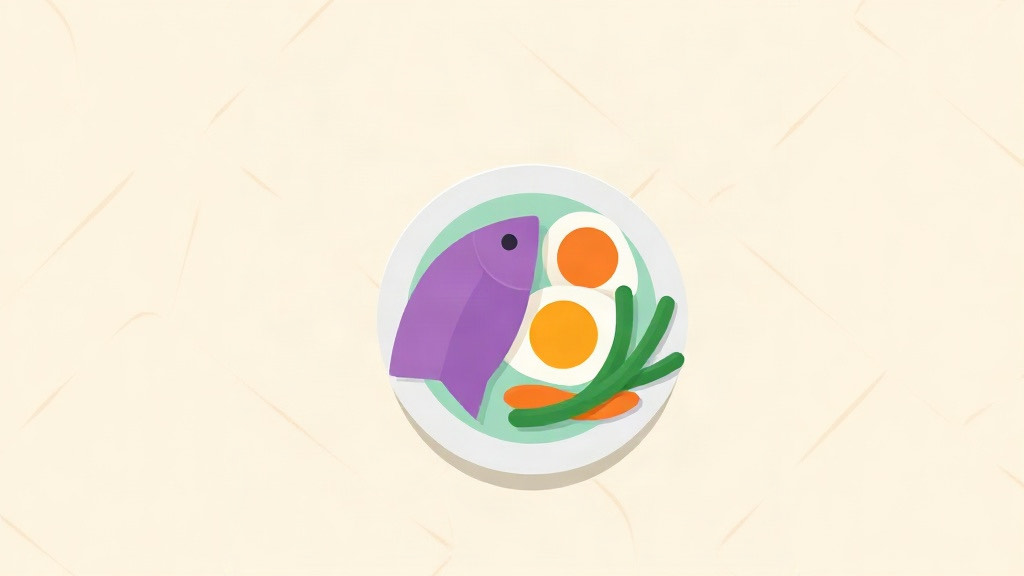
Ask a clinician who works with GLP-1 patients what they emphasize most, and protein comes up almost immediately. These medications are remarkably effective at quieting appetite, which is exactly the point. But the same suppressed appetite that makes weight loss possible also makes it easy to under-eat protein for months at a stretch, and the cost of that shows up somewhere the bathroom scale cannot see: your muscle.
This article covers why lean mass is at risk during rapid weight loss, the protein range commonly cited for people on GLP-1 medications, and the practical part: how to actually reach a protein goal when you are simply not hungry, and how to track it without turning every meal into a math assignment.
Why muscle is on the line
When you lose weight quickly, not all of it is fat. Clinicians commonly note that significant lean-mass loss can accompany rapid weight loss when two protections are missing: enough dietary protein, and resistance training that gives the body a reason to keep the muscle it has. Miss both for long enough and a real share of the weight you lose can come from tissue you wanted to keep.
Why does that matter? Muscle is what carries you up stairs, out of chairs, and through the decades ahead. It supports joint stability and everyday strength, and it is metabolically active tissue, so preserving it also supports the maintenance phase that follows the loss phase. Losing muscle now can make weight easier to regain and harder to re-lose later, which is the opposite of what all this effort is for.
The tricky part is that the scale cannot tell the difference. A falling trend line looks like success whether the loss is fat or a mix of fat and muscle. That is why the two defenses, protein and resistance work, deserve deliberate attention rather than good intentions. They are also part of the story when progress stalls, which we cover in our guide to GLP-1 plateaus.
The range clinicians commonly cite
General guidance for people losing weight on GLP-1 medications commonly lands at roughly 1.0 to 1.5 grams of protein per kilogram of body weight per day, and some clinicians go as high as 1.6. To make the arithmetic concrete rather than prescriptive: for someone weighing 90 kg (about 200 lb), that range works out to roughly 90 to 135 grams of protein daily. That is grams of protein, not grams of food; a portion of chicken or fish contains far more on the plate than it contributes as protein.
Treat that range as a conversation starter, not a prescription. The right number for you depends on your health history, your kidneys, your goals, and how your clinician prefers to calculate it, which is why the target worth actually aiming at is the one your prescriber or a registered dietitian sets with you. What the general range mostly tells you is the scale of the task: for most adults it is a bigger number than a suppressed appetite will deliver by accident.
The appetite paradox: needing protein most when eating is hardest
Here is the awkward truth of GLP-1 nutrition: the medication raises the importance of protein at exactly the moment it lowers your interest in food. Meals shrink. The constant background pull toward eating, what many patients call food noise, goes quiet. Two bites in, you may be genuinely done.
If those smaller meals are mostly bread, rice, or whatever happened to be nearby, protein is the nutrient that quietly loses. The fix most dietitians suggest is simple to say and surprisingly effective to do: protein first. Eat the protein portion of the meal before anything else, because you may not get to the end of the plate, and the food you eat first is the food that actually happens.
The second adjustment is structural. Three large meals a day is a lot to ask of a small appetite. Many people do better spreading protein across the day in smaller moments: something at breakfast, something mid-afternoon, something at dinner, so no single sitting has to carry the whole goal.
 GLP 1 Tracker AppFree on the App Store. Log protein, water, weight and doses in seconds, and everything stays on your phone.
Get the app
GLP 1 Tracker AppFree on the App Store. Log protein, water, weight and doses in seconds, and everything stays on your phone.
Get the app
Practical foods for small appetites
On paper, hitting a protein goal is a shopping list. On a GLP-1, it is a texture and effort problem: what will you actually eat when nothing sounds good? A few categories earn their place:
- Ready to eat, no cooking: Greek yogurt, cottage cheese, string cheese, hard-boiled eggs kept in the fridge, canned tuna or salmon, rotisserie chicken.
- Gentle on a queasy stomach: cold and mild tends to beat hot and rich. Yogurt, eggs, tofu, and plain poached chicken are commonly suggested on rough days; our nausea guide covers eating patterns that help.
- Plant options that add fiber too: lentils, beans, edamame, and tofu pull double duty, since fiber is the other number GLP-1 users tend to under-eat.
- The pragmatic fallback: a protein shake or high-protein milk on days when a meal simply is not going to happen. Many dietitians are comfortable with this as a supplement to food rather than a replacement for it; ask yours what they recommend.
None of this needs to be gourmet. The goal is a repeatable set of defaults that work on your worst appetite day, not your best one.
Resistance training: the other half of the equation
Protein supplies the building material, but it is resistance training that tells your body the muscle is still needed. The two work together, and the general guidance is consistent: during intentional weight loss, some form of resistance work, done regularly, helps preserve lean mass in a way that protein alone does not.
This does not have to mean a gym membership or a barbell. Bodyweight movements, resistance bands, a pair of dumbbells at home, or a simple twice-a-week routine all count. What matters is that your muscles are asked to work against resistance regularly, and that the habit survives contact with real life. If you are new to exercise or have health conditions, clear the plan with your clinician first, then start smaller than feels impressive.
Activity is also worth a line in your log. Noting your sessions alongside weight and protein makes the whole picture visible: when the weight trend and the training habit move together, you can see it.
Track one number, not thirty
You do not need a full nutrition database, barcode-level precision, or a diary of every ingredient. For this specific job, one running number does the work: grams of protein today. A reasonable estimate logged every day beats a perfect record abandoned by next month, and the difference between 40-gram days and 90-gram days is obvious even in rough numbers.
This is exactly how protein logging works in GLP 1 Tracker App: a quick add, a running daily total, and a goal to aim at, sitting alongside your doses, weight, water and fiber, free. If you keep a smart scale, Apple Health import fills in weight automatically so the only typing left is the protein itself. And with Premium, the home screen widget puts today's protein progress next to your next dose and water count, so the number is in front of you at every unlock instead of buried in an app. Protein fits into a broader two-minute routine we describe in what to log every day on a GLP-1.
A gentle warning from the anti-obsession department: the log is a tool, not a report card. A day that misses the goal is information, not failure. What you are looking for is the weekly pattern, because the pattern is what protects muscle, and patterns forgive individual days.
The takeaway
Weight loss on a GLP-1 goes best when the weight you lose is the weight you meant to lose. The commonly cited range of roughly 1.0 to 1.5 grams of protein per kilogram per day, refined into a personal target by your clinician or dietitian, plus regular resistance training, is the established defense for your lean mass. A suppressed appetite will not deliver that by accident, so eat protein first, keep easy defaults on hand, and track the one number that tells you whether the plan is happening. It takes seconds a day, and your future self will be measurably stronger for it.
Frequently asked questions
How much protein should I eat on a GLP-1 medication?
Commonly cited general guidance for people losing weight on GLP-1 medications is roughly 1.0 to 1.5 grams of protein per kilogram of body weight per day, and some clinicians suggest up to 1.6. For someone weighing 90 kg (about 200 lb), that is roughly 90 to 135 grams daily. Treat the range as orientation, and ask your prescriber or a registered dietitian to set your personal target.
Can you lose muscle while taking Ozempic or Wegovy?
It is a real risk. Clinicians commonly note that significant lean-mass loss can accompany rapid weight loss when two protections are missing: enough dietary protein and regular resistance training. The scale cannot tell fat loss from muscle loss, so a falling trend line looks like success either way. Pairing a daily protein goal with resistance work is the established defense for keeping the muscle you have.
How do I get enough protein when I have no appetite?
Eat the protein portion of each meal first, since you may not reach the end of the plate. Spread protein across the day in smaller moments instead of three large meals, and keep easy defaults on hand: Greek yogurt, cottage cheese, hard-boiled eggs, canned tuna, rotisserie chicken. On days when a meal is not going to happen, many dietitians accept a protein shake as a supplement to food; ask yours.
Do I have to count calories on a GLP-1 to protect muscle?
No. For this specific job, one running number does the work: grams of protein today. A reasonable estimate logged daily beats a perfect food diary abandoned within a month, and the gap between a 40 gram day and a 90 gram day shows up clearly even in rough numbers. A fuller diary is optional, something for a curious day or a dietitian's request.
What is an easy way to track protein on a GLP-1?
In GLP 1 Tracker App, protein logging is free: a quick add, a running daily total, and a goal to aim at, sitting beside your doses, weight, water and fiber. Read-only Apple Health import can fill in weight from a smart scale, and the optional Premium widget puts today's protein progress on your home screen. Everything you log stays on your phone, with no account.