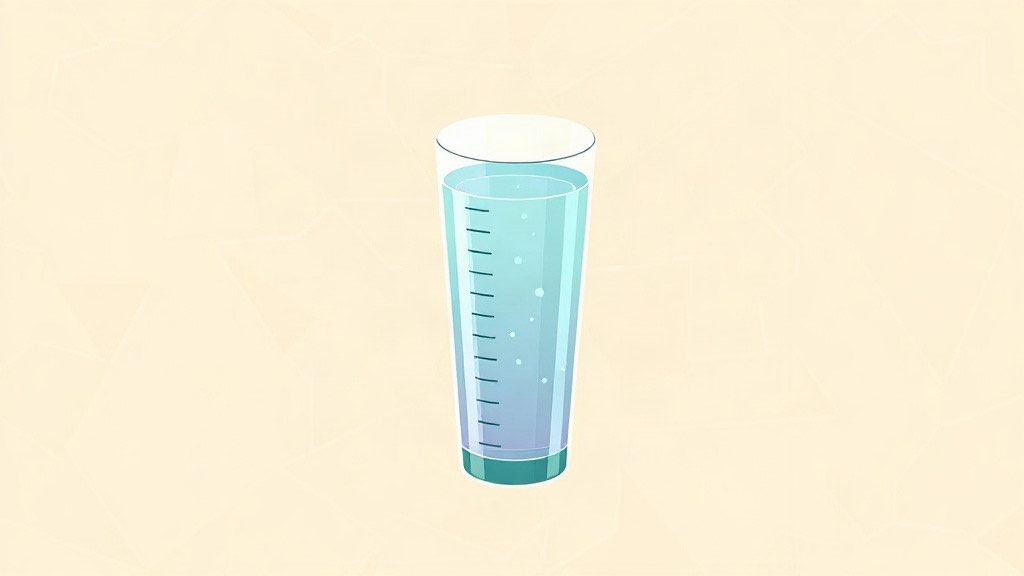
Nobody starts a GLP-1 medication worrying about water. The attention goes to doses, injection days, appetite, the scale. Then a few weeks in comes the headache that will not quit, the light-headed moment standing up, or the constipation that arrives out of nowhere, and a surprising number of those threads lead back to the same quiet cause: not drinking enough.
Hydration is the least glamorous number in GLP-1 life and one of the most consequential. Here is why these medications make it easy to under-drink without noticing, what the general guidance suggests, and the small habits that make the goal nearly automatic.
The signal that fades along with appetite
GLP-1 medications quiet the body's food signals; that is their job. But many people report that thirst goes quiet too. The cue that used to nudge you toward a glass of water simply arrives less often, or less loudly, so you can go most of a day on a few sips without ever feeling parched.
There is a second, sneakier effect. A meaningful share of daily fluid normally arrives through food: fruit, vegetables, soups, even bread all carry water. Eat half as much and you quietly lose that contribution as well. Put the two together, blunted thirst and smaller meals, and fluid intake can drift well below what your body needs while nothing feels wrong yet.
The practical conclusion: on a GLP-1, thirst stops being a reliable reminder. Drinking needs to run on structure instead of sensation, the same way your shot day runs on a schedule rather than a feeling.
What the general guidance says
Commonly cited general guidance puts daily fluid intake at roughly 2 to 3 liters for most adults, counting water and other beverages. Needs run higher in hot weather, with exercise, and during bouts of vomiting or diarrhea, and some medical conditions call for a limit rather than a target, which is why your own number is a clinician question, not a website answer.
The useful takeaway from the range is less the exact liter count than the gap it exposes. Most people who start logging their water are surprised at how little they actually drink on autopilot. Measured against 2 liters, a coffee at breakfast and a glass at dinner is not close, and seeing that gap in numbers is usually what finally changes the habit. Note that the range refers to fluid, not plain water alone: tea, sparkling water and herbal infusions all count toward the total, so hitting the goal does not require a monk's diet of tap water.
What under-drinking does on a GLP-1
Three complaints show up again and again in GLP-1 side effect diaries, and hydration touches all of them.
- Constipation. These medications slow gastric emptying, and slower digestion makes stools drier and harder to pass. Fluid is half of the remedy; fiber is the other half, and fiber without fluid can make things worse. Our guide to fiber and constipation on GLP-1s covers the pairing in detail.
- Dizziness. Light-headedness, especially when standing quickly, is often a low-fluid problem. It deserves a mention to your prescriber if it persists, but hydration is the first thing they will ask about.
- Headaches. The dull afternoon headache that improves after a big glass of water is a classic sign of running dry, and it is remarkably common in the early months of treatment.
Hydration also matters on nausea days, when drinking feels least appealing. Small, frequent sips of cool water, taken slowly, tend to sit better than large amounts at once, and keeping fluids up prevents a rough day from compounding into a dehydrated one. There is more on managing those stretches in our guide to nausea patterns worth tracking. And if vomiting or diarrhea is severe or you cannot keep fluids down, stop reading websites and contact your clinician; dehydration on that scale is a medical issue, not a habit issue.
 GLP 1 Tracker AppFree on the App Store. Water, protein, doses and weight in one private log that never leaves your phone.
Get the app
GLP 1 Tracker AppFree on the App Store. Water, protein, doses and weight in one private log that never leaves your phone.
Get the app
Habits that make water automatic
Because thirst will not remind you, the trick is to attach drinking to things that already happen. A few structures that work in practice:
- Front-load the day. A full glass when you wake up, before coffee, banks the first serving while willpower is irrelevant.
- Anchor to existing habits. A glass with every meal and snack, a glass when you sit down at your desk, a glass when you plug in your phone at night. Attached habits survive; free-floating intentions do not.
- Make the container do the counting. One bottle of known size, refilled a set number of times, turns the day's goal into "finish this twice" instead of mental arithmetic.
- Keep it visible. Water on the desk gets drunk; water in the kitchen gets forgotten. Visibility is most of the battle.
- Flavor is allowed. If plain water bores you, lemon, cucumber, mint or herbal tea all count toward the goal. The best fluid is the one you will actually drink.
One timing note: the weeks after a dose increase deserve extra attention. Appetite and thirst are usually at their quietest right after a step up, side effects are likeliest, and fluid does the most good, so that is exactly when to lean on structure instead of trusting how you feel. And if catching up on water late in the evening starts costing you sleep, shift more of the drinking earlier in the day; the goal is the daily total, not a bedtime sprint.
Logging water without making it homework
Water is the easiest number in your whole log: a tap per glass, and the day's total takes care of itself. In GLP 1 Tracker App, water logging is free and sits beside your doses, weight, protein and fiber, so the daily picture lives in one place. If you already log water in another app or from a smart bottle that writes to Apple Health, the app's read-only Apple Health import picks it up automatically, so nothing is entered twice; our Apple Health guide explains how the permissions work.
For the days when the app never gets opened, the Premium home screen widget shows your water count at a glance, next to today's protein and your next dose, and a glance at the home screen is often all the reminder the habit needs. Water logging also slots neatly into the broader routine we describe in what to log every day on a GLP-1: it is one of the four items, and the fastest of them.
As with every number in your log, the aim is a pattern, not perfection. A missed afternoon is noise. A week of totals sitting far below your goal, alongside constipation or dizziness entries in your side effect diary, is a pattern worth acting on, and exactly the kind of concrete detail worth mentioning at your next appointment.
The takeaway
On a GLP-1, thirst is no longer a dependable messenger, and smaller meals quietly remove the fluid food used to provide. The commonly cited 2 to 3 liters a day is a reasonable orientation point, your clinician can make it personal, and structure beats sensation for actually getting there: anchor drinking to existing habits, keep the bottle visible, and log the glasses so the gap between feeling fine and being hydrated stays visible. It is the cheapest fix in the entire GLP-1 toolkit, and one of the most reliable.
Frequently asked questions
How much water should I drink on a GLP-1 like Ozempic or Wegovy?
Commonly cited general guidance puts daily fluid intake at roughly 2 to 3 liters for most adults, counting water and other beverages. Needs run higher in hot weather, with exercise, or during vomiting or diarrhea, and some medical conditions call for a limit rather than a target. Your own number is a clinician question, especially if you have heart or kidney conditions.
Do GLP-1 medications make you less thirsty?
Many people report that thirst cues fade along with appetite on GLP-1 medications, so the nudge toward a glass of water arrives less often or less loudly. Smaller meals also remove the fluid that food normally provides. Together, those two effects make it easy to drift well below your fluid needs without noticing, which is why structure and logging beat waiting to feel thirsty.
Can dehydration cause constipation on a GLP-1?
It contributes. GLP-1 medications slow gastric emptying, and slower digestion makes stools drier and harder to pass; low fluid intake makes that worse. Fluid is half of the commonly suggested remedy and fiber is the other half, and fiber without fluid can backfire. Under-drinking is also a frequent thread behind dizziness and headaches, so persistent symptoms are worth raising with your prescriber.
Does tea or sparkling water count toward my water goal?
Yes. The commonly cited 2 to 3 liter range refers to fluid, not plain water alone, so tea, sparkling water and herbal infusions all count toward the total. If plain water bores you, lemon, cucumber or mint can keep a bottle interesting. The best fluid is the one you will actually drink, and the daily total is what matters, not the source.
What is the easiest way to track water intake on a GLP-1?
Make the container do the counting: one bottle of known size, refilled a set number of times, turns the goal into finishing it twice instead of mental arithmetic. In GLP 1 Tracker App, water logging is free, a tap per glass, and read-only Apple Health import picks up water written by other apps or smart bottles. The optional Premium widget shows the day's count at a glance.