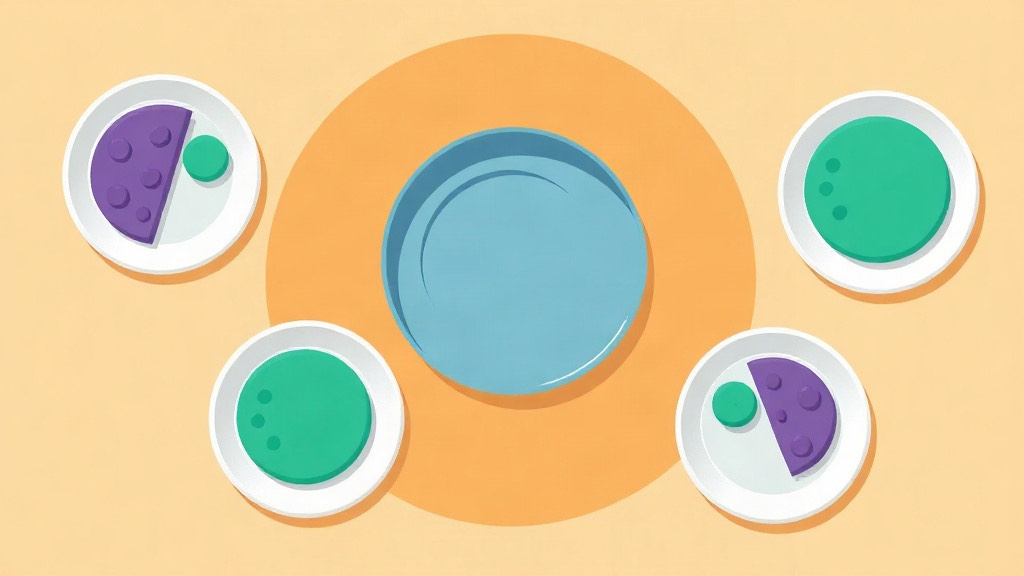
A GLP-1 shrinks your appetite. It does not shrink your household. Dinner is still at six, the people you feed still want dinner at six, and at least one of them will still be hungry after the portion that now fills you comfortably by the middle of the plate. The medication changed one appetite at the table, and the table seats everyone it always did.
There are two ways to handle that. One is cooking two dinners, a full version for them and a separate small one for you, which lasts about as long as any doubled chore lasts. The other is cooking one meal and letting the difference live in the plating. This article is about the second way: the weeknight dinner, shared, with nobody shortchanged and nobody cooking twice.
One meal, two appetites
The core idea is simple enough to say in a sentence: the meal is one meal, and the portions are individual. A stir-fry is a stir-fry; the difference is that one plate holds a small amount and another holds a generous one. A pot of chili serves four the way it always has; your bowl is simply smaller than it used to be. Nothing about the recipe has to announce that anyone at the table is on a medication.
This works best when the meal is built from components rather than as a single fused dish: a protein, a vegetable or salad, a starch, something sauced. Components let each person compose their own plate, which is the whole trick. A casserole that is all one thing is harder to scale per person than a table with a chicken, a pan of vegetables and a pot of rice.
What a smaller portion actually amounts to, in terms of what is on the plate and how to think about it without weighing food at the stove, is its own subject, and we keep it in its own article: What a Portion Looks Like on a GLP-1. The household-scale version of the same idea, batch cooking for a week of small high-protein meals, lives in Meal Prep for GLP-1 Weeks: Small Portions, High Protein.
Plate yours first
The single most useful habit at a shared table is also the smallest: serve your own plate before anyone else's. There are three reasons, and only one of them is about portion size.
The first is composition. When you plate first, you decide what your plate is made of while the pans are still full, and you can put the protein-rich parts of the meal at the front of your plate rather than letting them be what is left over. With an appetite this quiet, what leads the plate matters; the reasoning, and the commonly cited protein guidance behind it, is laid out in Protein Goals on GLP-1s: Protecting Muscle While Losing Weight.
The second is social. A plate served before the comments start is a settled fact rather than a negotiation. The third is practical: it removes the trap of eating whatever remains after everyone else has served, which on a shrunken appetite can mean a meal composed entirely of the thing you least needed more of. Once your plate is set, your job at the table reverts to what it always was: passing dishes and asking about someone's day.
 GLP 1 Tracker AppSaved meal templates turn taco Tuesday into a two-tap log. Protein, water and doses, all private.
Get the app
GLP 1 Tracker AppSaved meal templates turn taco Tuesday into a two-tap log. Protein, water and doses, all private.
Get the app
Serving family style, with the bowls working for you
Family style, everything in bowls and platters in the middle of the table, sounds at first like a hazard for a smaller appetite: all that food, within reach, all evening. In practice it tends to run the other way. Family style is component dining at its most natural. Each person builds a plate from what is passing by, portions are set at the plate rather than in the kitchen, and nobody's serving is a statement.
A little arrangement helps. Keeping the protein dish and the vegetables where they reach your hands easily, and the basket of bread a bit farther away, nudges a quiet appetite toward the parts of the meal that carry it furthest, without a word being said about anyone's choices. The same pass-the-bowl rhythm also means seconds exist for whoever wants them, including you on a hungrier day. Appetite on these medications varies day to day, and family style absorbs that variance better than any pre-plated arrangement.
The other half of family style is what it does for the room. A table of shared bowls is a table of ordinary dinner, which is exactly the register a household wants when one member's relationship with food is quietly being renegotiated.
Leftovers are the feature, not the failure
Cook the recipes you have always cooked, at the quantities you have always cooked them, and a smaller appetite turns your kitchen into a leftover machine. This is not a problem to solve; it is the system working. Tomorrow's lunch exists because tonight's dinner produced it. The chili that used to feed four dinners now feeds six. A quiet week stacks the freezer with meals for the week after, which is the entire logic of batch prep, arriving as a side effect.
Leftovers also do something appetite management cannot: they smooth out the variation. Some days on a GLP-1 are hungrier than others, and a refrigerator with ready portions means a hungrier day is handled without a second cooking session, while a quieter day wastes nothing. They are also the answer to the tired evenings, because fatigue is a commonly reported effect of these medications and a day with no cooking energy in it is a normal weeknight, not an exception. The freezer holding last Sunday's roast is the version of you that planned ahead, feeding the version that cannot face the stove.
Store things promptly, label what benefits from a label, and let the extra portions carry the week.
Comments at the table
At some point, usually early, someone will look at your plate and say some version of: is that all you are eating? It is worth having an answer ready, because improvised answers under observation tend toward either over-explaining or defensiveness, and neither helps.
The answer that works is short, true and boring: this is what fits right now. Said once, calmly, with a follow-up question about their day attached, it ends most exchanges. You do not owe the table a tour of your medication, your dose schedule or your appetite. If you have chosen to tell your household about the medication, the table is still not the venue for the follow-up questions; those go better privately, with the full story, when you are not both holding forks.
The deeper practice is keeping food talk neutral in both directions. That means no commentary on your own portions, no running narration of what you are not eating, and equally no commentary on anyone else's plate or body. A table where amounts are not a topic is a table where your smaller portion stops being an event by about the second week. Neutral is also the fair position to hold as the cook: you feed the household the way you always did, and you let each plate, including yours, speak for itself.
Logging the repeats without re-typing them
Family cooking runs on repetition. Tuesday is tacos, Sunday is the roast, and the pasta with the green sauce appears twice a month like clockwork. Repetition is a chore for a food diary and a gift to a tracker, because GLP 1 Tracker App has saved meal templates for meals you repeat: build the template once with the ingredients and amounts a dinner actually involves, and logging that night becomes a couple of taps instead of a re-enactment.
This is the habit worth building in the first month of family cooking on the medication: whenever a dinner you will cook again goes well, save it as a template while the memory is fresh. Within a few weeks, the week's logging collapses into a few taps per meal plus your dose, weight, protein and water as usual. The point of all of it is the same as the point of the single meal: the logistics should shrink to fit the appetite, so there is room left for the actual evening, which was always the part worth keeping.
Restaurants and feasts have their own articles, because eating out on a smaller appetite is a different skill from cooking for one, and holidays are their own season entirely; both are linked below. The weeknight table, though, is where most of GLP-1 family life happens, and it turns out to be very manageable: one meal, your plate first, bowls in the middle, leftovers in the fridge, and dinner talk about anything but portions.
One dinner, one logSave the meals your household repeats and log them in seconds. Everything stays on your phone.
Download
Frequently asked questions
Do I have to cook separate meals for myself on a GLP-1?
No, and cooking separately is the fastest route to burnout. The sustainable version is one meal with flexibility at the plate: cook the dinner your household knows, then plate your own portion first, with the protein-rich parts of the meal leading. Everyone eats the same food; the amounts differ. What a smaller portion looks like in practice is covered in our article on portions on a GLP-1.
How do I handle comments about how little I am eating?
With a short, true, boring answer, delivered once. Something like: this is what fits right now. You do not owe anyone a tour of your medication, your appetite or your plate, and a factual sentence said calmly ends most exchanges faster than a defense would. If comments keep coming, it can help to say the topic is off the table at dinner and pick it up privately with that person later.
How do I log a family dinner I cook every week without typing it again?
GLP 1 Tracker App has saved meal templates for meals you repeat. Build the template once from a dinner you cook regularly, with the ingredients and amounts you actually use, and logging that night becomes a matter of a couple of taps plus any adjustments. Repeats are exactly what family cooking runs on, so the dinners you cook most often are the ones cheapest to log.
Should my family eat the same high-protein meals I eat?
That is not this article's call, and we do not advise on what children or anyone else at the table should eat. What goes on the household menu is a decision for your household, ideally with a pediatrician or clinician in the loop where children are involved. What this article covers is your side of the shared table: plating your portion, keeping talk neutral, and making one meal work for two appetites.
What do I do with the leftovers when I am eating less?
Treat them as the plan rather than the problem. A full recipe with a smaller appetite reliably produces extra portions, and that is tomorrow's lunch, a freezer meal for a low-energy week, or the base of the next dinner. Leftovers also absorb the day-to-day swing in appetite that GLP-1 users know well: a hungrier day eats the extra, a quieter one saves it. Store them promptly and the week gets easier, not fuller.