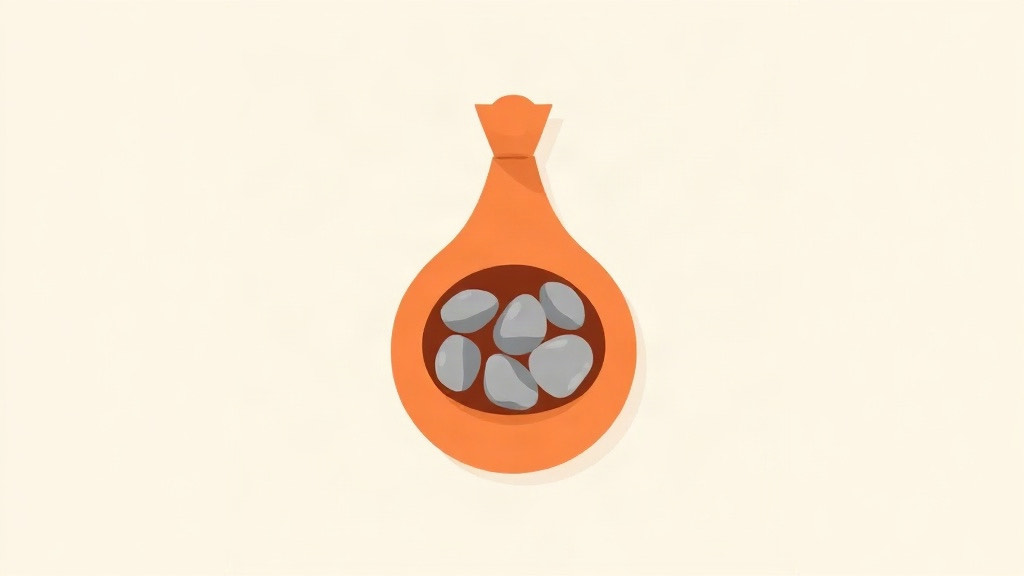
The gallbladder is a small pear-shaped organ tucked under the liver. It stores bile, squeezes some out when a meal arrives, and otherwise spends decades being completely ignored. On a GLP-1 it comes up in conversation more often than it used to, and it is worth understanding why calmly, in daylight, rather than at two in the morning with a phone in your hand.
Gallbladder events, mainly gallstones (the clinical term is cholelithiasis) and inflammation of the gallbladder (cholecystitis), are recognized in the labeling for GLP-1 medications. They have been reported in clinical trials and in postmarketing reports. That is not a reason to be alarmed by a medication your prescriber chose deliberately. It is a reason to know which symptoms deserve a phone call, which deserve being seen today, and what a clinician will actually need from you.
One thing to be clear about at the start: this is an awareness article, not a diagnosis tool. Pain in the upper abdomen has a long list of possible causes, and telling them apart takes imaging and blood tests, not a list of symptoms on a website.
Two things are happening at the same time
The reason the gallbladder comes up on these medications is that two separate influences point in the same direction.
The first has nothing to do with GLP-1s specifically. Rapid weight loss, by any method, changes the composition of bile, and it has been recognized as a gallstone risk for decades. People who lose weight quickly after bariatric surgery or on very low calorie diets have long been counselled about it. If a medication produces substantial weight loss, that older risk comes along with the result.
The second is more specific. GLP-1 medications can reduce how forcefully the gallbladder contracts, partly because the usual cholecystokinin-driven signal to empty is blunted. A gallbladder that empties less completely means bile sits in it longer, and bile that sits is more inclined to form stones.
So the honest summary is that this is partly the medication and partly the weight loss, and the two are difficult to separate in any individual person. That is also why the topic sits alongside other things that come with losing weight at pace, such as the hair shedding some people notice months in.
What the trial numbers actually say
Numbers help here, as long as they are read for what they are. In the STEP trials of semaglutide 2.4 mg for weight management, gallbladder disorders were reported in roughly 1.6 to 2.6 percent of participants taking the medication, compared with roughly 0.7 to 1.2 percent of those taking placebo.
Read those as trial figures, because that is all they are. They come from specific studies, in selected populations, over defined periods, using each trial's own definitions of what counted as a gallbladder disorder. They are not your personal odds, and no honest reading turns them into a prediction about you. What they do support is a fair characterization: uncommon, clearly more frequent than on placebo, and worth being able to recognize.
Notice also that the placebo groups were not at zero. Gallstones are common in the general population, and particularly common in the population most likely to be prescribed these medications in the first place.
Who tends to be watched a little more closely
The risk factors commonly listed for gallbladder disease are not exotic: female sex, age over 40, obesity, diabetes, and a history of previous gallbladder problems. Most of those describe a lot of people who start a GLP-1, and all of them exist independently of any medication.
This is background for a conversation, not a prediction. If several apply to you, it is a reasonable thing to raise at your next appointment, along with everything else worth bringing to the visit. It is not a reason to treat every twinge as an emergency.
One group can set this aside almost entirely. If your gallbladder has already been removed, you cannot form stones in an organ that is no longer there. Upper abdominal pain still deserves attention, for all the other reasons pain in that region deserves attention, but this specific worry is not yours.
 GLP 1 Tracker AppLog symptoms with severity and keep your dose history beside them, so an episode is a record rather than a memory. Free and private.
Get the app
GLP 1 Tracker AppLog symptoms with severity and keep your dose history beside them, so an episode is a record rather than a memory. Free and private.
Get the app
The symptoms that should prompt a call
The picture classically described for gallbladder trouble is pain in the upper right abdomen that persists rather than passing in a moment, often arriving after a fatty meal, and sometimes radiating around to the right shoulder or shoulder blade. Fever, yellowing of the skin or the whites of the eyes, and severe or repeated vomiting are the additions that raise the urgency sharply.
The table below sorts those the way people commonly find useful. When you are unsure which row something belongs in, treat it as the more urgent one.
| Level | Signs | What to do |
|---|---|---|
| Emergency | Severe abdominal pain that does not settle, especially with fever, repeated vomiting, or yellowing of the skin or eyes | Call emergency services or go to an emergency department now |
| Prompt evaluation | Persistent upper right abdominal pain, pain radiating to the right shoulder or shoulder blade, or repeated episodes of pain after fatty meals | Contact your clinic the same day; these are not symptoms to monitor for a week |
| Mention at the next visit | Brief, mild discomfort that passes quickly, with no fever, vomiting or color change, and no pattern to it yet | Note the details as they happen and raise them at your appointment |
Severe abdominal pain of any kind on a GLP-1 sits outside this table and outside this article. It is never a wait-and-see symptom, whatever you suspect is causing it, and we have written separately about why that is and what to do.
Diagnosis belongs to imaging, not to symptom lists
It is worth saying plainly how weak a symptom list is as a diagnostic tool. Upper abdominal pain is produced by the stomach, the intestines, the liver, the pancreas, the heart, muscles, and by ordinary indigestion, among other things. It is also produced by the everyday gastrointestinal side effects of these medications, which is exactly what makes self-assessment unreliable here. Reflux and slowed stomach emptying can both create discomfort high in the abdomen that has nothing to do with the gallbladder.
Gallbladder problems are identified with imaging, usually ultrasound, along with blood tests. Ten minutes with a probe answers a question that no amount of careful symptom reading can. That is the entire argument for being examined: not because your symptoms are certainly serious, but because the test is quick and reading tea leaves is not.
Two things we will not do here. We will not suggest that you stop, pause or change your medication, because that decision belongs to the clinician who prescribed it and who can see your results. And we will steer you firmly away from gallbladder cleanses, flushes and supplements marketed for this purpose. There is no home remedy worth recommending for a suspected gallbladder problem, and the useful action is the unglamorous one: get looked at.
What is worth writing down
If you have had an episode, the details a clinician wants are specific, and they are the first things memory loses. A note written at the time beats a reconstruction three weeks later at an appointment.
- What you ate, and when. The relationship to meals, particularly fatty ones, is part of the classic picture.
- Where the pain was. Upper right, central, or somewhere else entirely.
- Whether it radiated, and if so where to. The right shoulder or shoulder blade is the pattern most often described.
- How long it lasted. Minutes, an hour, most of the night.
- What came with it. Nausea, vomiting, fever, any change in the color of your skin or eyes.
- Whether it has happened before, and how the episodes compare.
In the app, that goes in the side effect diary with a severity attached, sitting on the same timeline as your dose history, so the sequence is unambiguous when someone asks. The side effect tracking guide covers why severity beats a checkbox, and it applies here more than almost anywhere: "some pain after dinner" and "an hour of severe right-sided pain that woke me up" are different reports, and only one of them gets the right response.
The takeaway
Gallbladder problems on a GLP-1 are uncommon but real, driven partly by the medication's effect on gallbladder emptying and partly by the weight loss itself. Trial figures put them in the low single digits of percent, above placebo, which is worth knowing and not worth panicking about. Persistent upper right abdominal pain, especially with fever, repeated vomiting or yellowing of the skin or eyes, means being seen rather than waiting. Everything after that, including any question about your medication, is a conversation with a clinician who has the pictures and the blood work, not a decision to make alone at midnight.
Keep an accurate recordDoses, symptoms and severity in one timeline. No account, no ads, everything stays on your phone.
Download
Frequently asked questions
Can GLP-1 medications cause gallbladder problems?
Gallbladder events, mainly gallstones and gallbladder inflammation, are recognized in the labeling for GLP-1 medications and have been reported both in clinical trials and in postmarketing reports. Two things appear to contribute: rapid weight loss is itself a long known gallstone risk, and these medications can reduce how forcefully the gallbladder contracts, so bile sits longer. Symptoms that persist deserve prompt medical evaluation rather than watching.
What do gallbladder symptoms feel like on Ozempic or Wegovy?
The picture commonly described is persistent pain in the upper right abdomen, classically after fatty meals, sometimes radiating to the right shoulder or shoulder blade, and sometimes accompanied by fever, severe or repeated vomiting, or yellowing of the skin or eyes. Any of those warrants prompt medical attention. Upper abdominal pain has many possible causes, so treat this as a reason to be examined, not as a diagnosis.
How common are gallbladder problems on semaglutide?
In the STEP trials of semaglutide 2.4 mg for weight management, gallbladder disorders were reported in roughly 1.6 to 2.6 percent of participants taking the medication, compared with roughly 0.7 to 1.2 percent of those on placebo. Those are trial figures from selected study populations, not a personal probability. The practical reading is that this is uncommon, more frequent than on placebo, and worth recognizing early.
Should I stop my GLP-1 if I think I have gallstones?
That is not a decision to make from a website, and we will not tell you to stop or to continue. What these symptoms call for is prompt medical evaluation, because gallbladder problems are diagnosed with imaging and blood tests rather than symptom lists. Tell the clinician which GLP-1 you take and when your last dose was. Any change to your treatment is their call, made with results in front of them.
Can you still have gallbladder pain after your gallbladder is removed?
If your gallbladder has been removed, you cannot develop stones in an organ that is no longer there, so this particular concern does not apply to you. That does not make upper abdominal pain harmless. Pain in that area still has many possible causes, and severe or persistent abdominal pain on a GLP-1 always deserves prompt evaluation rather than waiting to see whether it settles on its own.