Ask ten people on a GLP-1 how often they weigh themselves and you will get ten confident answers, most of them contradicting each other. Daily people say the trend is smoother. Weekly people say daily weighing drove them slightly mad. Both are describing something real, and neither is describing a rule.
The useful version of this question is not which cadence is correct. It is understanding how much a scale actually moves for reasons that have nothing to do with fat, and then choosing the cadence that lets you see a trend without handing your morning to a number.
The number moves more than most people expect
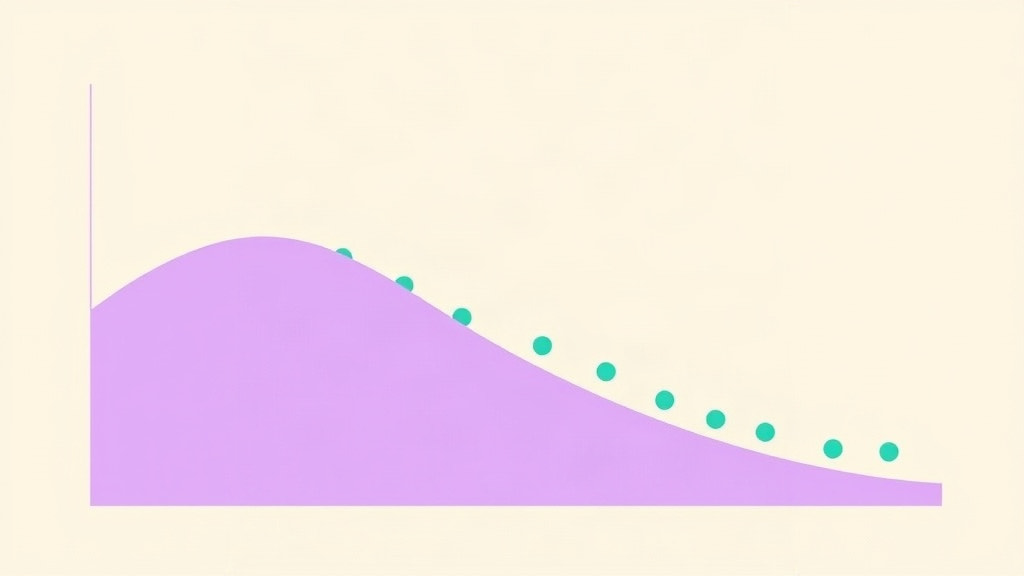
This is the fact that reframes everything else. Commonly cited figures put normal day-to-day variation at roughly plus or minus 2 pounds, which is a spread of about 4 pounds between a person's lightest and heaviest normal readings in a given week. Nothing about that range requires anything to have gone right or wrong.
Water is the main culprit. Body water alone can shift by up to about 5 percent in a day, which for most adults is several pounds, and temporary shifts of roughly 1 to 5 pounds are attributed to sodium intake, carbohydrate intake, hormones, stress and activity. A salty dinner, a hard workout, a poor night of sleep, a hormonal phase: each of these can move a scale by more than a good week of actual fat loss.
Which means a single reading is close to meaningless on its own. It is one sample from a noisy signal, and the noise is frequently larger than the thing you are trying to measure.
Weight has a weekly rhythm, too
The noise is not even random. One study that tracked daily weights in 80 adults found a consistent weekly pattern: weight tended to be highest on Sundays and Mondays and declined through the week. Weekends look different from weekdays in eating, drinking, sleep and activity, and the scale registers all of it a day or two later.
The practical consequence is worth spelling out. If you weigh weekly and your weigh-in day is Monday, you are consistently sampling the top of your own rhythm. That is fine, as long as you always do it, because you are comparing Mondays to Mondays. It only becomes a problem when the day drifts, and a Monday-to-Friday comparison invents a loss that is not there, or a Friday-to-Monday comparison invents a gain.
A rhythm like this is normal variation. It is not a record of a good week and a bad weekend.
The case for weighing daily
The strongest argument for daily weighing is statistical, not motivational. More data points make an averaged trend line smoother and far less sensitive to any single strange morning. Weigh once a week and one odd reading is the entire week. Weigh seven times and that same reading is one seventh of the picture, and the average absorbs it.
There is a second benefit that people often report: familiarity takes the sting out. Once you have watched the number rise 2 pounds and fall 3 across a normal week, a higher morning stops registering as bad news and starts registering as Tuesday. The number loses some of its authority, which is generally a good thing.
The cost is that you see every one of those readings. If any of them lands hard, daily weighing is buying you a smoother chart at the price of a worse morning, which is not always a good trade. Either way, our guide to reading a weight trend line shows what the averaged line is actually telling you.
The case for weighing weekly
Weekly weighing solves the same problem from the other direction: it simply exposes you to fewer noisy readings. You never see the 2 pound morning after a salty meal, because you were not on the scale that day.
It also fits the rhythm of a weekly medication rather nicely. Many people already have a shot day anchoring their week, and attaching the weigh-in to it means one ritual instead of two, on a day you are already thinking about the medication. That same anchor works for a wider check-in, which our five-minute weekly review turns into a fixed six-question routine.
The trade is that each reading carries more weight, both statistically and emotionally, and an unlucky sample can make a perfectly good week look like a bad one. Comparing three or four consecutive weekly readings rather than the last two mostly solves this.
 GLP 1 Tracker AppFree on the App Store. Log weight beside your doses, or let Apple Health import it from your scale.
Get the app
GLP 1 Tracker AppFree on the App Store. Log weight beside your doses, or let Apple Health import it from your scale.
Get the app
Conditions matter more than frequency
Whichever cadence you pick, the quality of the data comes from keeping the circumstances steady. The commonly suggested setup:
- Same time of day, usually first thing in the morning.
- After using the bathroom, before eating or drinking anything.
- Same scale, on the same hard floor. Scales disagree with each other; yours only needs to agree with itself.
- Similar clothing, or none. A change of outfit is worth a pound or two on its own.
Keeping those constant removes a real slice of the variation, and what is left is closer to signal. It is the cheapest improvement available to anyone tracking weight, and it costs nothing but consistency.
What you are actually looking for
Not today's number. The direction over about two weeks, at minimum.
Two weeks is roughly the shortest window in which normal fluctuation stops being able to fake or hide a trend. Anything shorter is a coin flip dressed as information. Over a month or two, the picture gets clearer still, which is why the interesting questions on a GLP-1 tend to be answerable only in retrospect.
This matters especially when the number stops moving. Weight loss on these medications typically slows as the body adapts, and that is expected physiology rather than a failure of anything. Our article on hitting a plateau on a GLP-1 covers what several weeks of data can actually tell you and which parts of it belong in a conversation with your prescriber.
It also matters because the scale is not the only measure, and sometimes not the most informative one. Weight can sit still for weeks while measurements keep moving, particularly for people doing resistance training to protect lean mass. Our guide to measurements worth tracking beyond the scale covers what else is worth writing down and how often.
When the scale is not a neutral object
For plenty of people it is just a number, and the rest of this article is enough. For plenty of others it is not, and that deserves saying plainly rather than being left as an unspoken assumption.
If daily weighing affects your mood, or if checking starts to feel compulsive, weighing less often is a completely legitimate choice. It is not a failure of nerve and it is not giving up on tracking. A weekly or even monthly weight still shows a trend perfectly well, and the alternatives are real data: how clothes fit, energy, what you can do on a flight of stairs, measurements taken once a month. Some people track weight only at appointments and are none the worse for it.
If weighing is distressing, that is worth raising with your clinician. It is a normal thing to bring up, they have heard it before, and they can help you decide what is worth tracking and how often, including the option of not tracking weight yourself at all.
The one thing that is never true is that weighing frequently is a test of discipline. It is a measurement choice. The right cadence is the one that gives you useful information at a cost you are willing to pay, and if the cost is too high, the answer is to change the cadence, not to endure it.
Setting it up so it takes ten seconds
Whatever you choose, the goal is that logging the number costs you almost nothing. In GLP 1 Tracker App, weight logging is free and sits beside your dose log, your protein and water counts and your side effect diary, so the weight trend can be read next to the things that plausibly explain it. Free accounts keep the last 30 days of history, and Premium extends that to unlimited history for anyone who wants to look back over months rather than weeks.
If you have a smart scale that writes to Apple Health, the app can import weight read-only, so a daily weigh-in becomes a step on a scale and nothing else. Our guide to GLP-1 tracking and Apple Health covers the permission model and how to revoke it. Everything stays on your phone either way, with no account and no server involved.
And keep the rest of the routine small. Our guide to what to log every day on a GLP-1 makes the case that a two-minute log you keep beats an exhaustive one you abandon by week three.
The short version
Normal daily fluctuation is larger than the change you are looking for, so no single reading means much. Daily weighing gives a smoother average; weekly weighing gives fewer bad mornings. Keep the conditions identical either way, read the direction over two weeks rather than the number today, and remember that weight has a weekly rhythm of its own. If the scale is costing you more than it gives you, weigh less often and let the trend take longer to appear. That is a legitimate trade, and it is yours to make.
Try it freeNo account, no ads. Weight, doses and how you felt, all in one place on your phone.
Download
Frequently asked questions
Should I weigh myself every day on a GLP-1?
Either cadence works, and neither one is correct. Daily weighing gives more data points, which makes an averaged trend line smoother and less sensitive to any single odd morning. Weekly weighing exposes you to fewer noisy readings in the first place. What matters either way is the direction over about two weeks rather than any single number, so pick the cadence you can keep up calmly.
Why did my weight go up overnight on a GLP-1?
Almost always water and food volume rather than fat. Day-to-day swings of roughly plus or minus 2 pounds are commonly cited, which is a range of about 4 pounds, and body water alone can shift by up to about 5 percent in a day. Temporary shifts of roughly 1 to 5 pounds are attributed to sodium, carbohydrate intake, hormones, stress and activity. An overnight rise is noise, not a reversal.
What is the best time of day to weigh yourself?
Consistency matters more than the specific time. The most common approach is first thing in the morning, after using the bathroom and before eating or drinking, on the same scale, in similar clothing or none. Keeping conditions steady removes a large slice of the variation, which means the numbers you compare are actually comparable. The scale itself matters less than using the same one every time.
How long should I wait before deciding my GLP-1 is not working?
A single week is rarely enough signal to conclude anything, because normal fluctuation can hide or fake a week of change. Look at the direction over about two weeks at minimum, and remember that weight loss on these medications typically slows over time as the body adapts. Whether a plan is working, and what to do about it, is a conversation for your prescriber rather than a judgment to make from one reading.
What if weighing myself makes me feel bad?
Then weighing less often is a legitimate choice, and it costs you very little. A weekly or monthly weight still shows a trend, and measurements, how clothes fit and how you feel are real information too. If weighing affects your mood, or checking starts to feel compulsive, that is worth raising with your clinician, who can help you decide what to track and how often. No cadence is a test of discipline.